

What wine terms describe taste and texture?
Wine tasting terminology describes aroma, flavour, structure and texture rather than quality by itself. A wine may have pronounced acidity, firm tannin or a substantial body and still feel balanced if its sensory elements support each other. The wine tasting guide explains how to assess those elements, while the wine food pairing guide explains how they can affect food pairing.
Tasting vocabulary records perceived sensations and associations. A reference to cherry, cedar, stone or cream usually describes what the wine recalls to the taster; it does not necessarily mean that the named material was added to the wine.
Acidity
Acidity is the freshness-producing component that can make wine taste lively, tart or mouthwatering. Acidity can make the overall impression feel lighter, sharpen fruit flavours and provide contrast with rich or fatty food.
Acidity is not the same as sourness or poor balance. A wine with noticeable acidity may still feel harmonious when its sweetness, tannin, alcohol, flavour intensity and texture support that acidity.
Tannin
Tannin is the group of compounds associated with a drying or grippy sensation on the gums and tongue. Tannin commonly comes from contact with grape skins, seeds and stems, and oak contact can also influence the tannic feel of a wine.
Tannin is a structural sensation rather than an aroma or flavour. Firm tannin can make a wine feel more resistant in the mouth, while softer tannin can create a smoother or more supple impression.
Body
Body is the perceived weight and fullness of wine in the mouth. A light-bodied wine feels relatively delicate, while a full-bodied wine feels broader, denser or more substantial.
Body does not provide a complete quality judgement. Alcohol, sugar, flavour concentration, acidity and texture can all affect perceived body, and a lighter wine can be as balanced and expressive as a fuller wine.
Balance
Balance is the relationship among acidity, tannin, sweetness, alcohol, flavour intensity and texture. A balanced wine presents those elements without a component distracting from the overall sensory impression.
Balance is contextual rather than uniform. A sweet wine and a dry wine can both be balanced even though their proportions of sweetness and acidity feel very different.
Finish
Finish is the flavour, aroma and texture that remain after wine has been swallowed or spat out. A long finish is one in which those impressions persist, while a short finish fades more quickly.
Finish can reveal a different emphasis from the initial taste. Fruit may recede while tannin, acidity, spice, bitterness or savoury notes remain more noticeable.
Aroma
Aroma is the scent perceived from wine before and during tasting. Aroma descriptions such as citrus, cherry, herbs, flowers or cedar identify sensory associations rather than ingredients necessarily present in the bottle.
Aroma can change as wine is exposed to air or warms in the glass. The words used to describe an aroma are interpretive, so different tasters may choose different comparisons for a similar sensation.
Flavour
Flavour is the combined impression of taste, aroma and mouthfeel during tasting. A flavour description communicates resemblance and does not guarantee that the named fruit, spice, herb or other material was used to make the wine.
Flavour can include fruit, floral, herbal, earthy, savoury, spicy or oak-associated impressions. The intensity and persistence of those impressions can be discussed separately from whether a taster personally enjoys them.
Minerality
Minerality is a tasting term for impressions commonly described with words such as stony, saline, smoky or chalk-like. Minerality is subjective sensory vocabulary rather than a standard measurement of the mineral content of wine.
A note that calls a wine mineral should therefore be read as a description of perceived character. The term does not, by itself, demonstrate that a particular soil component has passed directly into the wine as flavour.
Texture
Texture is the tactile feel of wine in the mouth. Silky, creamy, rough, waxy, smooth and grippy are examples of words used to communicate texture.
Texture can be shaped by tannin, acidity, residual sugar, lees contact, oak contact and other winemaking decisions. A texture term describes physical sensation and should not be treated as a complete statement about aroma, origin or quality.
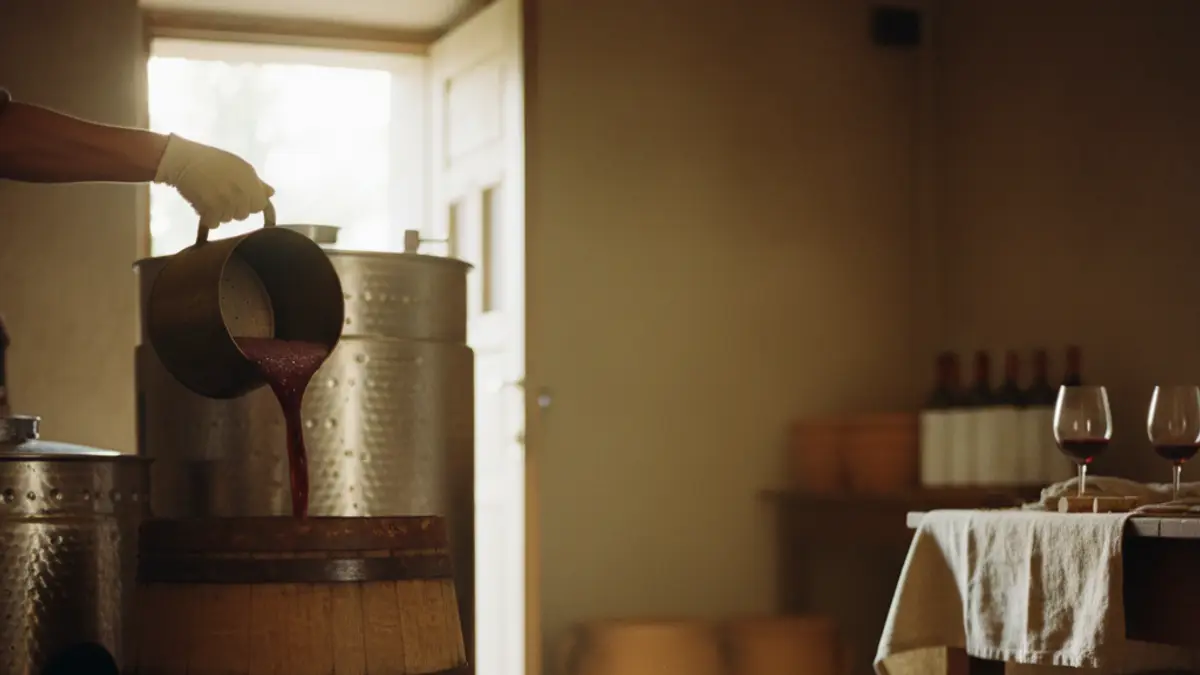
What wine terms describe how wine is made?
Winemaking terminology identifies processes that can shape wine aroma, flavour, texture, clarity, stability and style. A production term does not establish quality by itself because the result also depends on the grapes, the producer's decisions and the development of the finished wine. The complete guide to wine grapes explains the grape material from which those processes begin.
Winemaking terms should be interpreted as descriptions of technique. Fermentation describes a transformation, maceration describes contact with grape solids, and oak ageing describes maturation involving oak; none of those terms guarantees a particular taste in every bottle.
Fermentation
Fermentation is the process in which yeast converts grape sugars into alcohol and other compounds. Fermentation conditions and yeast activity can influence fruit expression, aroma, texture and the overall style of the finished wine.
Fermentation is distinct from sweetness. Wine can retain grape sugar if fermentation stops or is stopped before all available sugar is converted, while continued fermentation can produce a drier sensory result.
Malolactic fermentation
Malolactic fermentation is the bacterial conversion of sharper malic acid into softer lactic acid. Malolactic fermentation can make acidity feel rounder and can contribute buttery aromatic impressions in some wines.
Malolactic fermentation is different from alcoholic fermentation because bacteria perform the conversion and the principal sensory consequence concerns acidity. The effect may be prominent, subtle or difficult to isolate from the wine's other characteristics.
Maceration
Maceration is contact between grape juice or fermenting wine and solid grape material. Maceration can extract colour, tannin, aroma and flavour, particularly when dark-skinned grapes remain in contact with their skins.
The word maceration describes contact rather than a guaranteed result. The character extracted from grape solids depends on the fruit, the nature of the contact and the producer's broader winemaking choices.
Lees
Lees is the settled yeast and other fine material left after fermentation. Keeping wine in contact with lees can contribute savoury complexity, a fuller texture and aromas associated with bread or yeast.
A reference to lees describes material and contact during maturation rather than a grape variety or place of origin. The sensory result can differ according to the wine and the way the producer manages the lees.
Bâtonnage
Bâtonnage is the stirring of lees while wine matures. Bâtonnage can increase the creamy, rounded or textural impression associated with lees contact.
Bâtonnage is a specific cellar technique, but the word does not guarantee that a finished wine will taste creamy. Acidity, grape character, vessel choice and the duration and manner of lees contact can affect the result.
Fining
Fining is the use of a processing aid to remove suspended material or modify aspects of a wine's appearance and texture. Fining can help make wine clearer or more stable before bottling.
A fining statement describes a production choice rather than a quality grade. Readers seeking information about a particular processing aid should consult the producer because the term fining does not identify the material used.
Filtration
Filtration is the passing of wine through material designed to remove particles or microorganisms. Filtration can improve visual clarity and stability, although producers differ in how they apply it.
Filtered and unfiltered are production descriptions, not automatic indicators of quality. An unfiltered wine may retain visible sediment, while filtration can be applied with different aims and levels of intervention.
Oak ageing
Oak ageing is the maturation of wine in oak vessels or with oak material. Oak ageing can contribute impressions associated with spice, toast, vanilla or cedar, and it can alter texture as the wine develops.
An oak-ageing statement does not reveal every detail of oak influence. The character perceived in the glass also depends on the oak, the vessel, prior use, contact conditions and the underlying wine.
Blending
Blending is the combining of wines from different grapes, sites, vessels or production lots into a final wine. Blending can support consistency, balance, complexity or a recognisable producer style.
A blend is not inherently inferior or superior to wine identified with a particular grape or site. The term simply states that separate components were brought together before the finished wine was presented.
What wine terms describe where wine comes from?
Wine origin terminology connects a wine to a place, but each origin term can carry a different level of legal or geographic specificity. An appellation is a regulated origin name, while a region is a geographic area associated with wine production. The guide to wine appellations explains regulated origin systems, and the guide to understanding terroir examines the relationship between place and wine character.
Origin language should be checked against the system that governs the relevant label. A place name can identify a broad region, a protected designation, a recognised vineyard area or a producer's source claim, and those uses are not interchangeable.
Terroir
Terroir is the combined influence of a vineyard's natural setting, growing conditions and local human interpretation on wine. The term can encompass soil, climate, topography, exposure, site conditions and the choices through which growers respond to that setting.
Terroir is a concept used to discuss place-related character rather than a single measurable ingredient. A claim about terroir should therefore be read as an account of relationships among site, growing conditions and human practice.
Appellation
Appellation is a legally defined origin name governed by rules attached to its use. Depending on the applicable system, appellation rules may address geographic origin, permitted grapes, production practices or other conditions.
An appellation identifies regulated origin rather than a guaranteed flavour or quality experience. Wines carrying the same appellation can differ because producers, sites, grapes, harvest conditions and winemaking decisions can differ.
Region
Region is a geographic area associated with wine production. A region may contain appellations, subregions, vineyards and producers, but the word region does not by itself identify a particular regulated category.
A regional name can still provide useful context about climate, grapes and local styles. Readers should avoid assuming that every regional reference carries the same legal requirements as an appellation.
Protected designation of origin
Protected designation of origin is an EU origin designation associated with rules for a specified place and product. Protected designations of origin used on EU labels are registered in the European Commission's eAmbrosia database.
The European Commission's eAmbrosia database is the reference register to consult when checking whether a protected designation of origin appearing on an EU label is registered. Registration confirms the protected name; the applicable product specification provides the relevant conditions of use.
Protected geographical indication
Protected geographical indication is an EU origin designation connecting a product with a specified geographical area under its applicable rules. Protected geographical indications used on EU labels are registered in the European Commission's eAmbrosia database.
The European Commission's eAmbrosia database allows a reader to distinguish a registered protected geographical indication from wording that merely sounds geographic. The registered name should still be interpreted through its applicable product specification rather than as a guarantee of a particular taste.
Vintage
Vintage is the harvest year stated for the grapes used in a wine. Vintage can matter because growing and harvest conditions vary, affecting ripeness, acidity, concentration and the style available to a producer.
A vintage statement identifies harvest timing rather than bottling timing or a quality rank. Its practical significance depends on the region, grape, producer and kind of wine.
Estate bottled
Estate bottled is a label claim presenting wine as made and bottled by the named estate or producer. The conditions governing estate-bottled wording depend on the law and labelling system applicable to the wine.
Estate bottled should not be treated as a universal quality grade. The claim concerns production responsibility or location under the applicable rules, not a guaranteed sensory result.
Single vineyard
Single vineyard is a source claim identifying a named vineyard as the origin of a wine. The regulated meaning and supporting requirements for a single-vineyard claim can vary between jurisdictions and origin systems.
A single-vineyard claim can direct attention to site character, but it does not automatically demonstrate superior quality. Readers can check whether the vineyard name is formally recognised and how the relevant producer explains the source.
Cru
Cru is a term used within some regional systems for a recognised vineyard area, origin category or quality classification. Cru has a precise meaning only when read within the regional classification system that governs its use.
A cru term from one region should not be assumed to match a cru term from another region. The appropriate interpretation comes from the rules and hierarchy of the named origin system.
What wine terms describe sweetness and alcoholic strength?
Wine sweetness and alcoholic strength are separate characteristics. Sweetness is the sensory impression created largely by remaining grape sugar, while alcoholic strength is the amount of alcohol expressed on the label. The sweet versus dry wine guide provides further context for interpreting sweetness styles.
Fruit aroma should not be confused with sugar sweetness. A dry wine can smell strongly of ripe fruit, while a sweet wine can also have pronounced acidity that makes its sweetness feel less heavy.
Dry
Dry is a wine style with little or no perceptible sweetness. Dry describes sensory sweetness and does not mean that a wine lacks fruit aroma, flavour intensity, acidity or tannin.
A dry wine may smell or taste of ripe fruit because fruit character and sugar sweetness are different sensations. Acidity can also affect how dry a wine seems in the mouth.
Off-dry
Off-dry is a wine style with noticeable but restrained sweetness. Off-dry wine commonly combines remaining sugar with acidity so that the sweetness does not dominate the overall balance.
Off-dry is a style description rather than a universal guarantee of a precise sugar level across every labelling system. The term is most useful as an indication that some sweetness may be perceptible.
Sweet
Sweet is a wine style in which sugar sweetness is a clear sensory feature. Sweetness can be balanced by acidity, bitterness, tannin, alcohol or concentrated flavour.
Sweet does not mean simple or lacking in freshness. A sweet wine can retain pronounced acidity and can present complex fruit, floral, savoury or mature aromas.
Residual sugar
Residual sugar is grape sugar remaining in wine after fermentation has stopped or been stopped. Residual sugar contributes to sweetness, although acidity, alcohol, aroma, serving conditions and flavour concentration can affect how sweet the wine seems.
Residual sugar is not identical to perceived sweetness. Wines with similar analytical sugar can create different sensory impressions when their acidity and other structural elements differ.
Alcohol by volume
Alcohol by volume is the label expression of alcohol content as a proportion of the finished wine. EUR-Lex publishes Commission Delegated Regulation (EU) 2019/33, under which alcoholic strength stated on a label carries a tolerance of 0.5% vol against analysis, or 0.8% vol for certain categories.
The tolerance published through EUR-Lex under Commission Delegated Regulation (EU) 2019/33 means that labelled alcoholic strength should not be interpreted as an unrestricted claim of analytical precision. Alcohol by volume also describes strength rather than sweetness, body, origin or quality.
Fortified wine
Fortified wine is wine whose alcoholic strength has been increased through the addition of distilled spirit. Fortified wine can be dry or sweet, so fortification does not determine residual sugar or perceived sweetness by itself.
The timing and purpose of fortification can influence style. A label identifying fortified wine therefore describes a production category but does not provide a complete tasting description.
Dosage
Dosage is a measured addition made to some traditional-method sparkling wines after disgorgement. Dosage can influence the final relationship between sweetness and acidity.
A dosage reference describes a production step rather than the whole sensory profile. Grape character, acidity, maturation and other production decisions also shape how sweet or dry the finished sparkling wine appears.
Brut
Brut is a sparkling-wine sweetness designation interpreted under the rules applicable to the wine's market or origin. Brut generally communicates a dry style, but readers should consult the relevant regulatory context when precise classification matters.
Brut is not a statement about grape variety, production quality or place of origin. A brut sparkling wine can vary considerably in acidity, fruit character, texture and maturity.
What wine terms describe faults and storage problems?
Wine fault and storage terminology distinguishes intended style from unwanted change, contamination or damage. A wine fault is generally an unintended condition that obscures freshness, fruit, balance or the character the producer intended. Storage terminology matters because heat, light, closure performance and oxygen exposure can change wine after bottling.
Fault recognition can involve judgement. Some aromas are accepted or deliberately retained in particular styles, while the same aromas may be regarded as faults when they dominate another wine or mask its fruit and origin character.
Cork taint
Cork taint is a wine fault associated with musty aromas often compared with damp cardboard or a mouldy cellar. Cork taint can suppress fruit expression and make wine seem muted or flat as well as unpleasantly scented.
Cork taint is not the same as harmless pieces of cork floating in wine. The term describes sensory contamination, and its effects can range from obvious mustiness to a less conspicuous loss of aroma.
Oxidation
Oxidation is change caused by excessive exposure of wine to oxygen. Oxidation can dull fresh fruit character and produce bruised-apple, nutty, stale or browned impressions when those characteristics are not intended.
Oxidation is not always a fault because some wine styles deliberately use oxygen during production or maturation. The term describes a fault when oxygen-related change conflicts with the intended style or condition of the bottle.
Reduction
Reduction is a condition associated with limited oxygen exposure and sulphur-related aromatic compounds. Reduction can create aromas compared with struck match, rubber, cabbage or other pungent materials, and some reduced aromas may lessen after air contact.
Reduction should be distinguished from oxidation because the terms describe different conditions. The effect of exposing a reduced wine to air can vary, so air contact is not a guaranteed remedy for every reductive aroma.
Volatile acidity
Volatile acidity is the portion of wine acidity that can create vinegary or solvent-like aromas when pronounced. A restrained expression may be unobtrusive or stylistically accepted, while excessive volatile acidity can dominate fruit and other aromas.
Volatile acidity is an aroma-related condition as well as an aspect of acidity. It should not be confused with the fresh, mouthwatering structural acidity sought in many wine styles.
Brettanomyces
Brettanomyces is a yeast associated with aromas described as barnyard, leather, clove or medicinal. Many producers treat Brettanomyces as a fault when its aromas mask fruit, freshness or site character.
Responses to Brettanomyces can differ because some tasters accept restrained savoury character while rejecting a dominant expression. The term identifies the yeast and its possible sensory consequences rather than a universal judgement about every affected wine.
Heat damage
Heat damage is deterioration caused by wine being stored or transported in excessive heat. Heat damage can accelerate ageing and may lead to cooked aromas, leakage, closure movement or altered colour.
Heat damage cannot always be confirmed from bottle appearance alone. A compromised bottle may show physical warning signs, but sensory assessment can still be needed to determine whether the wine has been affected.
Lightstrike
Lightstrike is a light-caused wine fault associated with aromas compared with cooked cabbage or wet wool. Lightstrike is a particular concern for wine in clear or pale glass when exposed to strong light.
Lightstrike differs from heat damage even though poor display or storage can expose wine to both risks. The term specifically concerns chemical change initiated by light exposure.
Ullage
Ullage is the empty space between wine and the closure inside a bottle. An unusually large ullage can suggest evaporation, leakage, closure failure or oxygen exposure during storage.
Ullage is an indicator rather than proof that wine is faulty. Bottle format, wine age, closure and storage history can affect how the fill level should be interpreted.
Sulphites
Sulphites is the common label term for sulphur dioxide and related compounds associated with winemaking and preservation. The EU labelling threshold published by the European Commission for the phrase contains sulphites is 10 mg per litre of total sulphur dioxide.
The European Commission's EU threshold of 10 mg per litre concerns whether the phrase contains sulphites must appear on the label; the phrase does not state the exact amount present in a particular bottle. A sulphites declaration should therefore be read as required allergen information rather than a complete account of winemaking or wine quality.
Which wine label terms may be promotional rather than technical?
Some wine label terms imply scarcity, craft, selection or superior quality without identifying a shared production method, origin category or taste profile. Reserve, old vines, hand-crafted and boutique should be treated as producer claims unless the authority governing the relevant label gives the term a defined meaning.
Promotional wine terminology is not necessarily false or useless. A producer may use such language to communicate a genuine distinction within its range, but the wording alone may not disclose the criteria behind that distinction. Readers can look for supporting details about origin, grape source, production, maturation and the authority responsible for the label.
Reserve
Reserve is a label term suggesting selection, maturation or elevated status within a producer's range. Reserve does not, by itself, identify a universal production method, ageing requirement or quality standard.
A reserve claim is most informative when the producer or applicable origin authority explains the conditions behind it. Without that context, reserve should be read as positioning language rather than a complete technical description.
Old vines
Old vines is a label term presenting grapes as coming from mature vines. Old vines does not, by itself, state a standard vine age or explain how vine maturity was verified.
An old-vines claim may still provide useful producer context, particularly when the vineyard and planting history are identified. The phrase alone does not guarantee concentration, quality, rarity or a particular flavour.
Hand-crafted
Hand-crafted is a marketing term suggesting manual attention during wine production. Hand-crafted does not identify a consistent set of vineyard or cellar practices unless the producer explains what work was performed by hand.
Manual work can occur at many stages, including vineyard management, harvesting, sorting and cellar handling. A hand-crafted claim is therefore more meaningful when it names the relevant practice rather than relying on the general phrase.
Boutique
Boutique is a marketing term suggesting a small, distinctive or specialised wine producer. Boutique does not, by itself, establish production scale, ownership, quality level or wine style.
A boutique claim can communicate how a producer wishes to be positioned, but readers need additional information to evaluate the substance of the claim. Producer history, vineyard sources and production details provide more specific evidence.
Premium
Premium is a marketing term positioning wine as superior within a producer's range or market category. Premium does not, by itself, identify a regulated production standard, sensory threshold or origin category.
A premium claim can reflect price positioning, fruit selection, packaging, production choices or brand strategy. The label should provide more specific evidence before the term is treated as a technical distinction.
Special selection
Special selection is a marketing term implying that preferred grapes, wine lots or finished wines were selected. Special selection does not explain the selection criteria unless the producer provides supporting details.
The claim may refer to vineyard parcels, tasting decisions, maturation vessels or another internal process. Because the phrase is general, readers should look for a producer statement identifying what was selected and why.
Cellar selection
Cellar selection is a marketing term suggesting that wine received particular attention during maturation, tasting or blending. Cellar selection does not, by itself, identify a consistent production practice.
The meaning can differ from one producer to another because the phrase may refer to chosen barrels, tanks, production lots or finished bottles. Supporting production information is needed before the claim can be interpreted technically.
Limited release
Limited release is a marketing term suggesting restricted availability. Limited release does not, by itself, explain whether availability is restricted by grape supply, production choice, distribution, packaging or brand strategy.
A limited-release claim can be accurate without establishing superior quality. The phrase describes availability in general terms and should not be confused with a protected origin, grape source or production standard.
Bottom line
A wine glossary is most useful when it keeps sensory terminology, production terminology, origin terminology, sweetness terminology, strength terminology, fault terminology and promotional terminology separate. Acidity, tannin, body, finish, aroma and texture describe how wine is perceived. Fermentation, malolactic fermentation, lees contact, filtration, oak ageing and blending describe how wine is made. An appellation is a regulated origin name, while a region is a broader geographic description; protected designations of origin and protected geographical indications used on EU labels are registered in the European Commission's eAmbrosia database. Dry describes little or no perceptible sweetness, while alcohol by volume describes labelled strength. EUR-Lex publishes Commission Delegated Regulation (EU) 2019/33, under which labelled alcoholic strength carries a tolerance of 0.5% vol against analysis, or 0.8% vol for certain categories. Cork taint, oxidation, lightstrike and heat damage describe unwanted conditions that can affect a bottle. The EU labelling threshold published by the European Commission for the phrase contains sulphites is 10 mg per litre of total sulphur dioxide. Reserve, old vines, hand-crafted, boutique and similar expressions should be treated as producer claims unless the authority governing the relevant label defines them. Classifying each term before interpreting it reduces the risk of treating a sensory description as a production fact, a geographic reference as a quality guarantee or promotional wording as a regulated standard.
Primary sources
Every figure on this page comes from the body named in the sentence that states it. Here is where to check each one: