

Where does the money paid for a bottle of wine actually go?
A cost stack is the sequence of costs, taxes and commercial margins that turns wine into a retail bottle. The cost stack includes the liquid, glass, closure, labels, outer packaging, transport, alcohol duty, VAT or sales tax, distributor margin and retail margin. A distributor margin is the amount retained by the business that supplies wine to retailers, while a retail margin is the amount retained by the retailer after purchasing the wine and meeting its operating costs.
The liquid is the wine inside the package and the agricultural and production work required to create it. The liquid can reflect the cost of growing or buying grapes, making the wine, maturation where applicable, storage, quality control and bottling. Vineyard location, farming choices, labour requirements, cellar work, time in maturation and producer scale can all influence how much of the cost stack is assigned to the liquid.
A tightly defined place of origin can affect production choices, available supply and the price attached to a wine. The VinSip guide to wine appellations explains how regulated origin claims can influence grape sourcing and production, while the guide to understanding terroir explains why vineyard sites are not interchangeable sources of grapes. A recognised origin can support a higher shelf price, although a recognised origin does not guarantee that every bottle will provide equivalent quality or value.
Glass, closure, labels, cartons and protective materials are necessary parts of a conventional retail bottle. Packaging costs do not disappear when the liquid is inexpensive, and the same principle applies to handling, warehousing, delivery, breakage, administration, compliance and shop operations. Fixed or relatively fixed costs can therefore occupy a greater share of a cheap bottle's shelf price than of a more expensive bottle's shelf price.
Alcohol duty is an alcohol-specific tax, while VAT is a consumption tax applied to the duty-inclusive price under United Kingdom rules. HMRC states that the United Kingdom charges £30.64 per litre of pure alcohol on wine between 8.5% and 22% ABV from 1 February 2026, equal to £2.87 of duty on a 75 cl bottle at 12.5% ABV. HMRC also states that United Kingdom VAT of 20% is charged on the duty-inclusive price, so VAT is levied on the duty as well as on the wine.
Sales tax is a transaction tax used in the United States instead of VAT. USA.gov states that the United States has no VAT and that sales tax is set by state and locality. A comparison between a United States shelf price and a European shelf price must therefore account for the different tax systems rather than treating VAT and sales tax as identical charges.
A wine margin retail calculation is not a universal formula because retailers negotiate different buying prices and suppliers use different routes to market. The underlying cost-stack mechanism is consistent: packaging, tax, transport and selling costs reduce the amount available for the liquid. A moderate increase in the shelf price can create more room for grapes and winemaking when relatively fixed costs have already been covered.
Careful sourcing and sound winemaking remain possible in inexpensive wine, but the cost stack limits what the producer can spend. The VinSip guide to good-value cheap red wines focuses on wines that use an economically constrained production budget effectively. The lowest shelf price should not be assumed to provide the same grape quality, selection options or cellar work as a bottle with more money available for the liquid.
How much of a wine's price is tax, and why does the amount vary by country?
Tax can occupy a substantial part of a wine's shelf price, but the amount depends on the country, wine category, alcohol level and applicable consumption tax. Alcohol duty and VAT are separate charges: alcohol duty is an alcohol-specific tax, while VAT is applied to the duty-inclusive price under United Kingdom rules. Identical bottles can therefore carry different tax burdens before producer costs, distributor margin and retail margin are considered.
HMRC states that the United Kingdom charges £30.64 per litre of pure alcohol on wine between 8.5% and 22% ABV from 1 February 2026. HMRC states that the rate produces £2.87 of duty on a 75 cl bottle at 12.5% ABV. HMRC also states that United Kingdom VAT of 20% is charged on the duty-inclusive price, which means the VAT calculation includes the alcohol duty.
The exact share of a United Kingdom shelf price represented by tax changes with the selling price and the wine's alcohol level. HMRC's published rates nevertheless show why the shelf price cannot be treated as the amount received by the producer. Alcohol duty goes to the government, and VAT is collected as tax rather than retained as distributor margin or retail margin.
France applies a markedly different excise treatment to still wine. The European Commission's excise duty tables state that France charges €4.05 per hectolitre of excise duty on still wine, about €0.03 on a 75 cl bottle. The European Commission's Taxes in Europe database lists France's standard VAT rate on wine as 20%.
The European Commission's excise duty tables state that Germany, Spain and Portugal levy no excise duty on still wine. The absence of still-wine excise duty does not mean that wine is free of consumption tax because the European Commission's Taxes in Europe database lists standard VAT rates on wine of 19% in Germany, 21% in Spain and 23% in Portugal. Retail prices can also reflect packaging, transport, distribution and retail costs even where still-wine excise duty is absent.
Sparkling wine can receive different excise treatment from still wine within the same country. The European Commission's excise duty tables state that Germany applies the Schaumweinsteuer of €136 per hectolitre to sparkling wine at or above 6% ABV, equal to €1.02 on a 0.75 l bottle. Germany's treatment demonstrates why a country comparison must identify the wine category rather than relying only on the country name.
In the United States, the TTB states that the federal excise rate on still wine at or below 16% ABV is $1.07 per wine gallon, roughly $0.21 on a 750 ml bottle, before state and local taxes. USA.gov states that the United States has no VAT and that sales tax is set by state and locality. A United States tax comparison must therefore consider federal excise, state taxes, local taxes and the point at which sales tax is added.
Wine tax by country is not a reliable quality ranking. A lower tax burden can create more room for the liquid or a lower shelf price, but import costs, distribution arrangements, retailer costs and market demand can absorb that room. Tax comparisons are most useful when the bottle format, wine category, alcohol level and selling conditions are comparable.
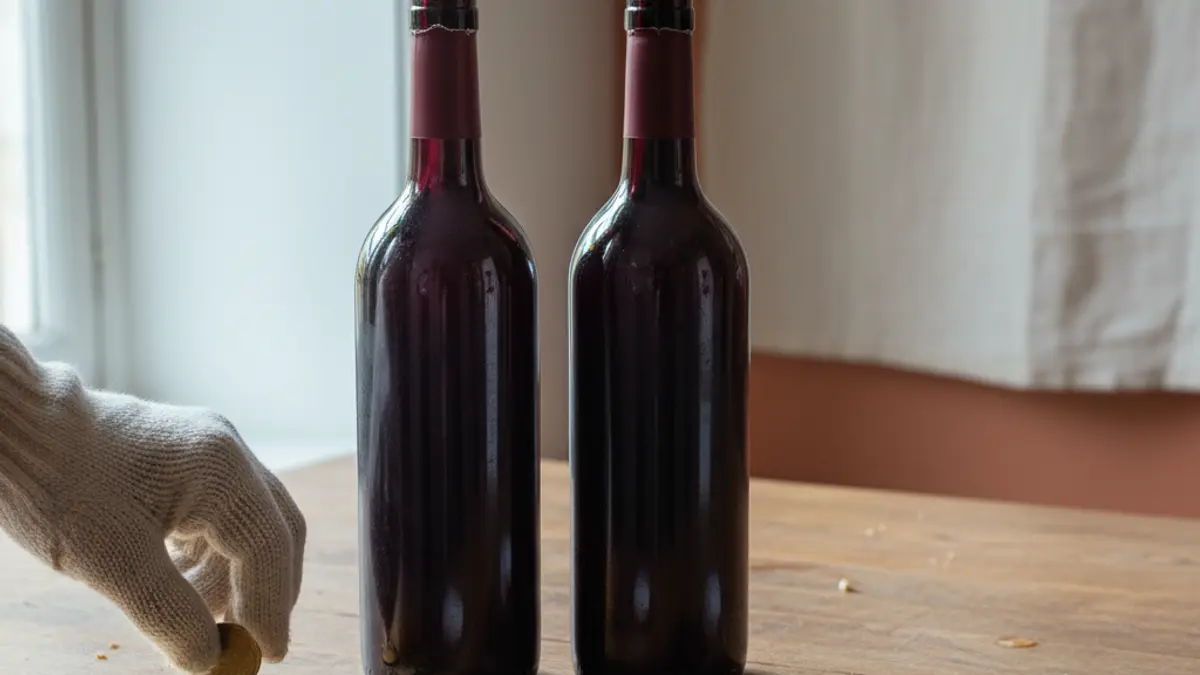
Why is the liquid in a cheap bottle worth less than the shelf price suggests?
The liquid in a cheap bottle can receive much less of the shelf price than a shopper expects because the cost stack must fund packaging, tax, transport, storage, distribution and retail operations. Relatively fixed costs consume part of the shelf price before money is available for grapes and winemaking. The cheapest category therefore gives the producer the least financial room to improve the liquid.
A constrained liquid budget does not mean that every inexpensive wine is poor or dishonestly made. Efficient production, large-scale grape purchasing, local distribution and favourable tax treatment can create genuine value. The cost stack still applies, however, and a low shelf price limits the money available after packaging, tax and commercial costs have been met.
A producer working within a constrained liquid budget may have less scope to pay for carefully farmed fruit, selective harvesting, low-volume production, extended maturation or rejection of weaker material. A producer with a more flexible liquid budget can choose to spend the additional room on grape sourcing or cellar work. The producer can also spend it elsewhere, so a higher shelf price creates opportunity rather than guaranteeing quality.
The relationship between shelf price and liquid quality is not linear. Once relatively fixed costs have been covered, additional spending can reach grapes and winemaking more directly. Moving away from the lowest shelf-price category can therefore produce a noticeable improvement in sourcing, balance, concentration, freshness or cellar care, although the result depends on how the producer allocates the additional revenue.
A higher shelf price may also support wine from a more specific origin rather than a broad blend assembled mainly to meet a price target. Specific origin can bring its own production costs and supply constraints, but specificity is not an automatic quality guarantee. An inexpensive broad blend can be enjoyable, while a bottle from a recognised region can be disappointing or poor value.
The useful price question is not simply why wine is expensive. The more precise question is how much additional spending reaches the liquid rather than tax, packaging, transport, distributor margin or retail margin. The answer varies by country, producer, retailer and route to market, which is why bottles at similar shelf prices can contain very different levels of agricultural and production investment.
Value comparisons work best when shoppers compare similar styles, origins, bottle formats and routes to market. The VinSip guide to wines for a moderate budget provides examples from a part of the market where relatively fixed costs may be less dominant than at the lowest shelf prices. Producer reputation, region, style and condition remain more informative than shelf price alone, but the shelf price sets the economic limits within which those factors operate.
A low shelf price can still represent good value when a producer uses scale, efficient packaging and a short route to market effectively. A higher shelf price can still represent poor value when prestige, elaborate packaging or retailer positioning absorbs the additional spending. The cost stack explains the available room for quality, not the producer's final decision about how to use that room.
How does the tiered distribution system affect wine prices in the United States?
The tiered distribution system in the United States is a commercial structure that separates producers, distributors and retailers. Under a common route to market, a producer sells wine to a distributor, and the distributor supplies the retailer before the wine reaches the consumer. The shelf price must therefore cover costs and margins beyond the producer's selling price.
The distributor performs functions that can include storage, sales representation, delivery, credit administration, compliance and market access. The retailer then meets purchasing, labour, premises, storage and selling costs. Distributor margin and retail margin compensate different businesses for different parts of the route to market, so neither margin should be confused with the amount received by the winery.
The tiered distribution system affects shelf price by creating commercial handoffs between the producer and the consumer. Commercial handoffs can help a producer reach markets that would otherwise be difficult to serve, but they also create costs that must be recovered. The amount paid at checkout is consequently not a direct measure of the amount paid to the producer.
State rules and business arrangements make the practical result uneven across the United States. Some wines move through broad distribution networks, while other wines use more local routes or retail formats with different operating costs. The same producer can therefore appear at different shelf prices in different markets even before state and local taxes are considered.
A prominent American wine region does not remove distribution and retail layers from the cost stack. The VinSip Napa Valley wine guide explains the regional context behind Napa Valley bottles, but a Napa Valley shelf price can still reflect distribution, retail operations, reputation, scarcity and production choices. Regional prestige and route-to-market costs are separate influences even when both appear in the same shelf price.
Federal excise tax is an additional layer rather than a replacement for distributor margin or retail margin. The TTB states that the United States federal excise rate on still wine at or below 16% ABV is $1.07 per wine gallon, roughly $0.21 on a 750 ml bottle, before state and local taxes. USA.gov states that the United States has no VAT and that sales tax is set by state and locality.
The tiered distribution system does not establish that every American bottle is overpriced. Distributors can give small producers access to distant markets, and retailers perform real storage, selection and selling work. The narrower price lesson is that an American shelf price is shared across the cost stack, so a direct comparison with a producer price or an overseas shelf price can be misleading.
Why does the same wine cost different amounts in neighbouring countries?
The same wine can cost different amounts in neighbouring countries because tax systems, import arrangements, distributor costs, retailer costs, currency exposure and local competition differ. A bottle crossing a border enters a different cost stack rather than carrying a fixed shelf price with it. The price difference can come from tax, but tax is not the only explanation.
Still-wine excise illustrates how national tax treatment can diverge. The European Commission's excise duty tables state that Germany, Spain and Portugal levy no excise duty on still wine, while the European Commission's excise duty tables state that France charges €4.05 per hectolitre of excise duty on still wine, about €0.03 on a 75 cl bottle. HMRC states that the United Kingdom charges £30.64 per litre of pure alcohol on wine between 8.5% and 22% ABV from 1 February 2026, equal to £2.87 of duty on a 75 cl bottle at 12.5% ABV.
VAT can also change the amount paid at checkout. The European Commission's Taxes in Europe database lists standard VAT rates on wine of 20% in France, 19% in Germany, 21% in Spain and 23% in Portugal. HMRC states that the United Kingdom VAT rate is 20% and that VAT is charged on the duty-inclusive price, which means the VAT calculation includes United Kingdom alcohol duty.
A lower excise burden does not guarantee a lower shelf price. A lower excise burden gives the supply chain a different starting point, but import costs, distributor margin, retail margin and local demand can still produce a higher shelf price. A market with no still-wine excise duty can therefore sell a bottle for more than another market if other parts of the cost stack are higher.
Local availability can change the cost stack independently of tax. A wine may be widely available near its producing region and require a short route to market, while the same bottle in a neighbouring country may be imported in smaller volumes or handled by a distributor with different costs. Retailers can also position the same brand differently according to local recognition and demand.
Currency exposure can affect a wine imported from a market using a different currency. An importer's replacement cost can change even when the producer's price and the wine itself remain unchanged. Retail competition, promotional strategy and the amount of stock already held can influence how quickly currency-related cost changes appear on a shelf.
The VinSip Bordeaux wine guide helps separate the regional and production context of Bordeaux from the taxes and commercial costs added after a bottle leaves the producer. A Bordeaux bottle sold near its source can follow a different route to market from the same Bordeaux bottle sold abroad. The difference does not automatically indicate a change in the wine's quality.
Cross-border price comparisons are most reliable when the wine, bottle format, seller type and route to market are genuinely comparable. A cheaper shelf price may reflect lower tax, broader availability or a shorter distribution route rather than inferior liquid. A higher shelf price may reflect import and selling costs rather than superior grapes or winemaking.

At what price does paying more start buying better wine?
No universal shelf price marks the point at which paying more starts buying better wine. Additional spending is most likely to improve the liquid after the cost stack can cover tax, packaging, transport, distribution and retail operations without severely restricting the grape and winemaking budget. The transition is gradual and depends on the country, style, producer, retailer and route to market.
Moving away from the lowest shelf-price category can give the producer more room to buy healthier or more characterful fruit, make more selective cellar decisions, reduce reliance on broad blending and absorb the cost of maturation. Greater financial room makes such choices possible but does not prove that a producer made them. The shelf price indicates available resources more reliably than it indicates how those resources were allocated.
After relatively fixed costs become less dominant, shelf price becomes a less dependable guide to sensory quality. Scarcity, prestige, brand demand, celebrated vineyards, packaging, allocation practices and retailer positioning can increase a shelf price without producing a matching increase in drinking pleasure. Some expensive wines are costly to grow and make, while other expensive wines carry a substantial premium for reputation or limited availability.
A practical buying decision begins by identifying the improvement being sought. Everyday wine may be judged by balance, freshness, sound fruit and freedom from obvious faults. Wine for a special occasion may be chosen for complexity, distinctive origin, maturation potential or confidence in the producer, while collectible wine can place greater emphasis on provenance, condition and scarcity.
Price alone cannot identify balance, complexity, maturation potential, provenance or condition. Producer information, origin, style and reliable tasting guidance give the shelf price context. Comparisons within a similar style and origin are generally more informative than comparisons that treat all wine as interchangeable.
The cost-stack mechanism provides a more useful answer than a universal threshold. Additional spending is often most productive where it gives the liquid more room after packaging, tax and commercial costs have been covered. Additional spending becomes less predictable as prestige, scarcity and retailer positioning account for more of the shelf price.
A higher shelf price should therefore be treated as evidence of a larger total budget rather than proof of better wine. The producer may direct the larger budget toward grapes and winemaking, but the cost stack may also direct it toward packaging, distribution or brand value. A careful buyer asks what the additional money appears to fund and compares the bottle with alternatives from a similar market position.
Bottom line
A wine cost stack is the sequence of costs, taxes and commercial margins included in a bottle's shelf price. The wine cost stack includes the liquid, glass, closure, packaging, transport, alcohol duty, VAT or sales tax, distributor margin and retail margin. Relatively fixed costs can occupy a larger share of a cheap bottle's shelf price, leaving less financial room for grapes and winemaking. Paying more can create additional room for the liquid, but no shelf price guarantees better wine because prestige, scarcity, packaging, distribution and retailer positioning can also increase the amount paid. Tax creates major differences between markets: HMRC states that United Kingdom duty from 1 February 2026 is £2.87 on a 75 cl bottle at 12.5% ABV, while the European Commission's excise duty tables state that Germany, Spain and Portugal levy no excise duty on still wine. The tiered distribution system in the United States separates producers, distributors and retailers, so an American shelf price includes commercial layers beyond the producer's selling price. Reliable comparisons use equivalent wines, bottle formats and seller types, and treat the shelf price as a cost stack rather than a direct payment for the liquid.
Primary sources
Every figure on this page comes from the body named in the sentence that states it. Here is where to check each one: