
What is a wine identifier app, and what is it actually doing?
A wine identifier app is software that converts visual evidence from a wine photograph into a ranked set of candidate bottle records. The app must move from pixels to usable clues and then compare those clues with records describing particular wines. A wine identifier app therefore performs recognition and retrieval rather than merely looking up information already embedded in the photograph.
Detection is the process of locating a bottle, label, capsule, shelf tag, or other relevant region within the photograph. Reading is the process of extracting visible clues such as producer text, wine name, appellation, vintage, varietal wording, bottle shape, label layout, and graphic marks. Matching is the process of comparing the extracted clues with candidate bottle records. Ranking is the process of ordering the candidate bottle records from more plausible to less plausible. Detection, reading, matching, and ranking are separate jobs, and that separation helps explain where an incorrect result originated.
A close photograph can provide the reading stage with detailed evidence. The producer name may be legible, the vintage may be visible, and the label typography may distinguish the photographed wine from another bottle made by the same producer. Matching can use the combined evidence rather than relying on an isolated word or design feature. A familiar producer name is weak evidence by itself because a producer can release wines from different places, grapes, ranges, and harvests under related label designs.
The result displayed by a wine identifier app is normally a proposed identity rather than proof that the photographed bottle and the returned record are identical. A useful result allows the user to compare the proposed producer, wine name, origin wording, and vintage with the actual bottle. The comparison should focus on details visible on the bottle rather than assuming that every field attached to the candidate bottle record has been observed in the photograph.
For an explanation of the label elements that can be used to verify a candidate bottle record, see how to read a wine label. Terms such as appellation, varietal wording, cuvée, and vintage are also covered in the wine glossary.
Apple’s App Store lists Wine Vintage Scanner - VinSip and identifies VAST FLOW as its publisher. Apple’s listing establishes the published app name and publisher, but it does not make every photograph equally identifiable. Detection, reading, matching, and ranking remain dependent on the visual evidence supplied by the photograph.
Why does scanning a whole shelf work differently from scanning a bottle?
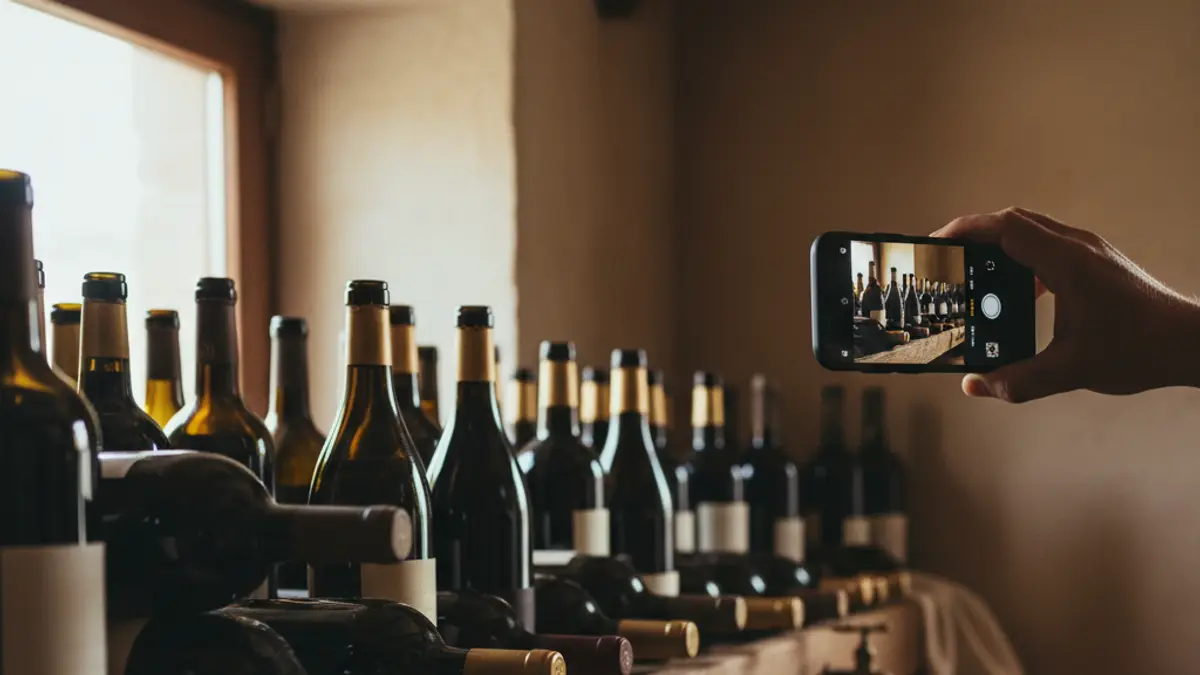
Scanning a whole shelf works differently because shelf recognition ranks wines visible in a scene, while single-bottle recognition identifies a bottle that has already been selected. A shelf photograph can contain overlapping bottles, reflections, partial labels, shelf tags, price cards, and competing text. A close bottle photograph narrows the recognition task to evidence associated with the selected bottle.
Shelf recognition must locate regions that plausibly belong to bottles or labels before the reading stage can interpret them. The reading stage may receive incomplete words, tilted label panels, text hidden by bottle necks, or labels partly obscured by neighbouring bottles. Matching can still create candidate bottle records from fragments, but ranking must retain the relationship between each candidate and its position in the shelf photograph.
A wine identifier app should not treat shelf recognition as an unrelated collection of close label photographs. The app needs to keep candidate bottle records associated with the visible positions that produced the evidence. If that association is lost, the app may combine text from a visible bottle with graphic design from a neighbouring bottle and return a real wine that is not actually represented at the indicated position.
Shelf recognition is best understood as an answer to the question, “Which wines are likely to be visible in front of the camera?” Shelf recognition does not automatically provide the complete details of a bottle later removed from the shelf. A close photograph remains useful after the user chooses a bottle because the close view may reveal vintage, appellation wording, producer details, or range information that the shelf photograph could not resolve.
Single-bottle recognition gives the user more control over the evidence. The label can be centred, the camera angle can be changed, glare can be reduced, and a back label or capsule can be photographed if the front label is ambiguous. Additional evidence can separate similarly named wines made by the same producer or distinguish a particular release from a visually related release.
The presentation of results should reflect the recognition task. A shelf result benefits from showing plausible candidates attached to visible bottle positions. A single-bottle result benefits from showing the proposed bottle record alongside the label details used to support the match. People comparing the purposes and limitations of available services can consult the guide to the best wine apps, while recognising that a strong shelf-recognition service and a strong single-bottle-recognition service are not necessarily solving the same task.
Where can wine recognition fail?
Wine recognition can fail during detection, reading, matching, or ranking. A failure at an early stage can pass unsuitable evidence into every later stage, while a ranking failure can place an unsuitable candidate above the correct candidate even when the correct bottle record is available. Identifying the stage involved helps determine whether a clearer photograph, additional label evidence, or a manual correction is the appropriate response.
Detection fails when the wine identifier app cannot isolate the relevant label or bottle from the photograph. Detection is responsible for problems caused by a bottle being outside the frame, obscured by another object, too small within a shelf scene, hidden by glare, or visually merged into a crowded background. If detection selects the wrong region, reading and matching can operate accurately on evidence that belongs to the wrong object.
Reading fails when the relevant region has been located but the visible clues cannot be extracted reliably. Reading is responsible for blurred lettering, curved-label distortion, decorative type, low contrast, shadows across text, and a vintage hidden at the edge of a label. A reading error can transform a producer name into a similar-looking name, omit appellation wording, or interpret a printed mark as a character. Better focus or an additional view may improve reading, but clearer text cannot correct a bottle region that detection failed to locate.
Matching fails when the wine identifier app has extracted useful clues but cannot connect them to the appropriate bottle record. Matching can be affected by incomplete database records, alternate label editions, market-specific naming conventions, and visible wording that does not uniquely distinguish the wine. A producer may also make related wines that share a family name and visual style. A useful wine identifier app should preserve ambiguity when the available evidence supports multiple candidates rather than forcing an exact identity.
Ranking fails when the appropriate candidate bottle record is available but another candidate is displayed more prominently. The leading result may still look convincing because it can describe a genuine wine from the same producer or use a related label design. Comparing the proposed result with the bottle’s producer, origin, wine name, cuvée wording, and vintage therefore checks the ranking output as well as the evidence supplied by earlier stages.
A user can investigate recognition failure by changing a limited part of the evidence before scanning again. A tighter label photograph tests whether the app can detect and read the central label. A photograph containing the complete front label tests whether text and layout together improve matching. A back-label photograph can provide origin, importer, bottling, or grape information that separates otherwise similar candidate bottle records.
A confident-looking result page does not guarantee that the scan is correct. Confidence is part of the app’s ranking output, while the physical bottle remains the object against which the proposed identity must be checked. A candidate bottle record should be treated cautiously when visible label details conflict with the returned producer, origin, wine name, or vintage.
Why does a wine identifier app sometimes name the right wine and the wrong vintage?
A wine identifier app can name the right wine and the wrong vintage because the producer, range name, and label design may provide clearer visual evidence than the harvest year. Vintage is the harvest year stated for a wine. The vintage may appear in small type, in a low-contrast area, near the edge of a label, or on a capsule rather than within the most prominent part of the design.
A candidate bottle record can therefore identify the correct wine family while leaving the vintage unreadable or uncertain. Matching can also produce a vintage error when a suitable record exists for the wine but the available image or associated database material describes a different release. A producer can retain a related front-label design across vintages, leaving insufficient visible evidence to separate the photographed release from another release.
Ranking may place the correct producer and wine name above alternatives while attaching an available vintage that is not the vintage printed on the bottle. The wine name and vintage should therefore be treated as distinct fields to verify. A correct producer match does not establish that every detail in the returned bottle record applies to the photographed bottle.
The bottle’s own vintage marking should be compared with the proposed bottle record before the result is used for buying decisions, cellaring records, drinking notes, or score comparisons. If a wine is labelled as non-vintage, the absence of a harvest year is meaningful and should not be replaced by a guessed vintage. A database field should not override clear wording visible on the physical bottle.
Alcoholic strength is another label field that should not be treated as an exact laboratory measurement. The European Union states in Regulation (EU) 2019/33 that the alcoholic strength printed on a label may differ from the analysed strength by up to 0.5% vol. A wine identifier app can read the printed alcoholic strength correctly while still reporting a label declaration that falls within the tolerance permitted by the European Union’s Regulation (EU) 2019/33.
Vintage errors matter because an associated score or review may concern a different release from the bottle being scanned. Before relying on a score attached to a candidate bottle record, consult how wine scores are explained and confirm that the score refers to the same wine and vintage shown on the physical bottle.
What does a wine identifier app do after it names the bottle?
After a wine identifier app proposes a bottle identity, the app can organise the candidate bottle record into information that a person can review and use. The displayed record may include producer, wine name, vintage, origin, grape information, alcoholic strength as printed on the label, tasting notes, scores, saved-bottle tools, and related wines. The identification process creates the link between the photograph and the candidate bottle record, but the usefulness of the result depends on whether the record clearly distinguishes observed evidence from associated information.
Observed details are clues visible in the photograph, such as a legible producer name, origin term, wine name, or vintage. Associated information is material attached to the candidate bottle record rather than directly read from the photograph, such as community notes, style descriptions, scores, or recommendations. Keeping observed details separate from associated information helps the user understand why the app proposed the result and which fields still require comparison with the bottle.
A wine identifier app is more useful when the path from photograph to candidate bottle record remains understandable. Showing the detected label region, recognised wording, or matching fields can help a user notice that a producer name was read correctly while a vintage was inferred from a different record. An unexplained result can conceal uncertainty behind a polished bottle page.
Wine recommendations are a use of the candidate bottle record, but recommendations are not part of visual recognition. After proposing a producer, origin, style, or grape, an app can surface wines that share selected characteristics. Shared characteristics can support exploration, but they do not establish that the wines taste the same or that a recommended bottle will reproduce the experience of the scanned bottle.
Origin information can also provide context for the candidate bottle record. Place, growing conditions, and producer decisions can contribute to a wine’s character, so origin should not be treated as decorative wording. The guide to understanding terroir explains how place-related information can affect the interpretation of a wine.
A wine identifier app may allow a user to save, compare, or record a bottle. Recordkeeping remains useful when the original recognition result is uncertain, provided the app allows the proposed identity to be corrected. A mistaken initial match should not become a permanent personal record merely because saving the proposed result is convenient.
Bottle identification is not a diagnosis of bottle condition. A wine identifier app may describe the expected style associated with a bottle record, but a front-label photograph cannot determine whether the particular wine is corked, oxidised, or otherwise compromised. Sensory faults must be assessed from the wine itself. For distinctions between expected wine characteristics and faults in a poured wine, see wine faults and what they mean.
When is a wine identifier app the wrong tool?
A wine identifier app is the wrong tool when the question concerns the condition, authenticity, provenance, storage history, or exact contents of a particular bottle. A photograph can support identification of visible packaging, but label recognition cannot establish how a bottle was stored, whether its closure preserved the wine, or whether the contents correspond to the packaging. Those questions require evidence beyond detection, reading, matching, and ranking.
A wine identifier app is also unsuitable when the photograph lacks distinctive visual information. A bottle without a visible label, a generic house-pour bottle, a heavily obscured bottle, or a blurred shelf image may not provide sufficient evidence for recognition. The appropriate output may be uncertainty, a request for a clearer label view, or a group of plausible candidate bottle records. A forced exact name is less useful than a clear statement that the image cannot support an exact identification.
Database scale does not remove the need for usable visual evidence. Vivino publishes its own scale as 74 million users, 3.26 billion scanned labels, and 19.6 million wines in its database. Vivino’s published figures describe the service’s scale, but they do not guarantee that every bottle, label edition, vintage, or market-specific release can be matched from every photograph.
VinSip does not claim to have the largest wine database. Database size alone does not establish that a particular photograph contains the clues needed for a correct candidate bottle record. Recognition can still fail when the relevant bottle is represented in a database but its producer, wine name, origin, or vintage cannot be read from the submitted image.
App-store popularity is separate from recognition accuracy for a particular bottle. Apple lists Vivino under both Food & Drink and Shopping, and Apple’s App Store card shows 133,899 ratings averaging 4.84 as of 7 August 2026. Apple’s rating information can describe how users have responded to Vivino overall, but it does not verify a proposed vintage or prove that a shelf candidate corresponds to the bottle in front of the camera.
For a selected bottle, a dependable use of a wine identifier app is to obtain a candidate bottle record and then check that record against the visible label. For a shelf, a dependable use is to rank wines that appear to be present and then obtain a close photograph of the chosen bottle. Questions that cannot be answered from visible packaging require direct inspection, seller documentation, provenance records, sensory assessment, or knowledgeable professional evaluation.
Bottom line
A wine identifier app is software that turns visual evidence from a photograph into a ranked set of candidate bottle records through detection, reading, matching, and ranking. Detection locates the relevant bottle or label, reading extracts visible clues, matching compares those clues with bottle records, and ranking orders the plausible candidates. Single-bottle recognition identifies a bottle that has already been selected, while shelf recognition ranks wines visible in a wider and more crowded scene.
A returned wine name is a proposed identity that should be checked against the physical bottle’s producer, wine name, origin wording, and vintage. Vintage requires separate verification because a wine can be named correctly while its harvest year is unreadable, absent from the photograph, or associated with another release record. A wine identifier app can assist with bottle discovery, contextual information, recommendations, comparisons, and personal recordkeeping, but label recognition cannot establish provenance, authenticity, storage history, bottle condition, closure performance, or the exact contents behind the label.
Primary sources
Every figure on this page comes from the body named in the sentence that states it. Here is where to check each one: