
| Attribute | Value |
|---|---|
| Country | Portugal |
| Principal grapes | Alvarinho (Albariño), Loureiro, Trajadura, Avesso |
| Styles produced | Light, fresh white, Sparkling, Rosé |
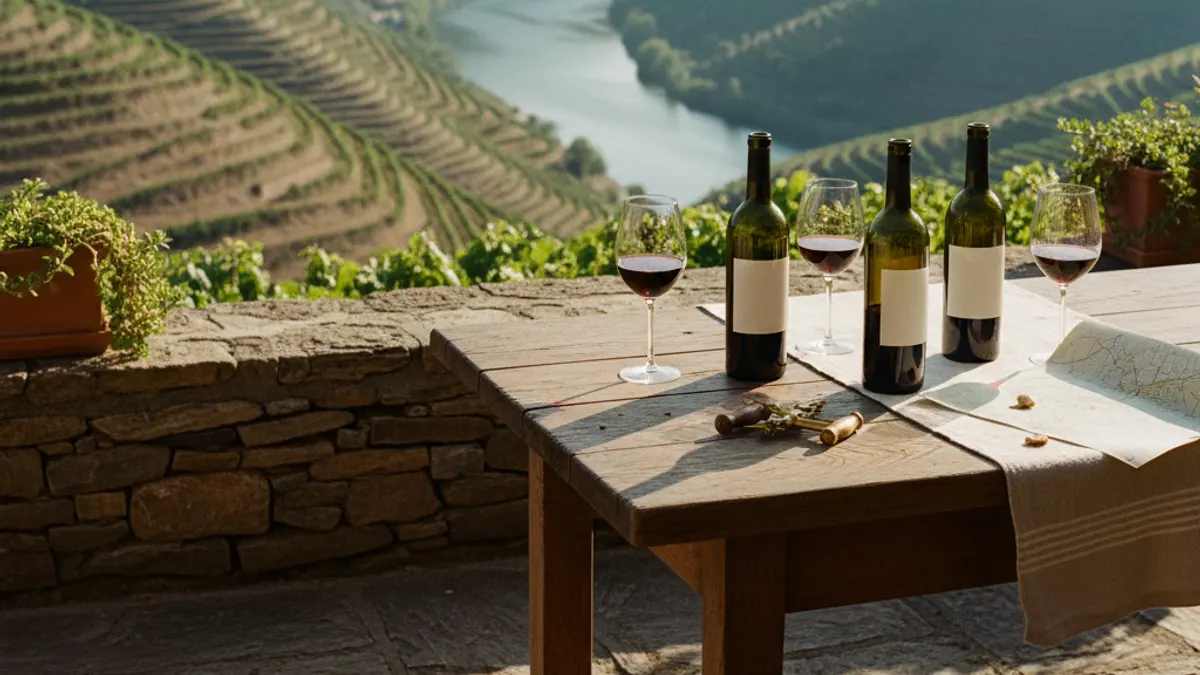
Wine Region
Vinho Verde Wine Region — Portugal's Crisp Northwest Whites
Portugal
Vinho Verde is Portugal’s verdant northwest DOC, famed for light, high-acid white wines—often with a gentle spritz—made from Alvarinho, Loureiro, Trajadura and Avesso. The DOC covers river valleys and low foothills where Atlantic maritime influence, heavy rainfall and granitic soils produce low-alcohol, aromatic wines with bright acidity and saline minerality. Look for Monção e Melgaço for concentrated Alvarinho, the Lima and Cávado sub-regions for perfumed Loureiro blends, and producers such as Soalheiro, Anselmo Mendes and Aveleda who represent single-varietal and reserve styles. Vinho Verde makes everything from inexpensive, food-friendly frizzantes to serious single-vineyard Alvarinhos and oak-aged Avessos. This guide explains terroir, principal grapes, appellations and what to taste, and it will help you plan a visit across Ponte de Lima, Melgaço and the Minho river valley.
Wine styles
Light, fresh whiteSparklingRosé
Key grapes
Alvarinho (Albariño)LoureiroTrajaduraAvesso
What makes the terroir of Vinho Verde different?
Vinho Verde sits in Portugal’s Minho sub-region where the Atlantic governs temperature and rainfall. Soils are variable: coastal and valley parcels commonly have alluvial loams, while higher terraces and interior slopes feature decomposed granite and schist derived from the Peneda-Gerês massif and ancient crystalline bedrock. Elevations generally range from 50–400 metres above sea level, with many classic Alvarinho sites clustered around 100–250 m in Monção e Melgaço where well-draining granitic soils aid ripening.
The climate is maritime—cool summers, mild winters, high humidity and annual precipitation often exceeding 1,200–1,800 mm across the DOC. Morning fogs and Atlantic winds moderate days and preserve acidity, but heavy rainfall and spring moisture increase fungal pressure, so growers prioritize canopy management and earlier harvest windows. Budburst in April-May can face late-spring rains; harvest typically runs from late August through October, staggered by variety and sub-region. These combined factors—cool maritime climate, rainfall, and mixed granitic/alluvial geology—are why Vinho Verde produces low-alcohol, high-acid whites with green fruit, floral notes and a characteristic mineral lift.
Which grapes are grown in Vinho Verde?
Alvarinho (Albariño) is the premium white of Vinho Verde, concentrated in Monção e Melgaço. On local granitic sites it builds ripeness and saline minerality: expect white peach, apricot, citrus zest and stone-derived minerality. Alvarinho wines range from zesty single-vineyard bottlings to barrel-fermented examples; alcohol tends to be higher than blend components, typically 11.5–13.0%.
Loureiro thrives on cooler, more humid slopes around Lima and Cávado. Loureiro gives pronounced floral aromatics—laurel, orange blossom and citrus—providing perfume and lift in blends. It remains lower in alcohol and accentuates the classic Vinho Verde perfume in youthful wines.
Trajadura (often blended) supplies mid-palate weight, low acidity and ripe tropical notes—apple, pear and melon—balancing the sharpness of Loureiro and Alvarinho. Avesso has emerged as a textural, high-acid variety with lime, green apple and dense mid-palate; producers sometimes partial-malo or age Avesso in neutral oak to add complexity. Each variety plays a defined role in regional blends or single-varietal expressions and shows distinct personality tied to local soils and microclimates.
What wine styles and appellations come from Vinho Verde?
The Vinho Verde DOC comprises a mosaic of sub-regions—most notably Monção e Melgaço (Alvarinho), Lima, Cávado, Ave, Basto, Sousa, Amarante, Baião and Paiva—each permitted on labels for single-subzone designation. The DOC rules allow varietal labeling and a range of sparkling and still formats. The classic image is the low-alcohol, slightly effervescent white (frisante) made for early drinking, but the region’s spectrum extends to still, full-bodied whites, rosés and red wines.
Entry-level Vinho Verde (often blends of Loureiro, Trajadura and Arinto) retails affordably and emphasizes fresh citrus and spritz. Mid-tier offerings include single-varietal Alvarinho and Avesso wines—often fermented on lees or with partial oak—released under producers like Soalheiro and Anselmo Mendes. Sparkling (espumante) Vinho Verde and labeled sub-region Alvarinhos are the prestige tiers; single-vineyard Monção e Melgaço Alvarinhos command higher prices and cellaring potential. Expect pricing and style to correlate with sub-region, vineyard exposure and producer choices.
Can you visit wineries in Vinho Verde, and how?
Best visiting months are late spring (May–June) for wildflower and vineyard growth, or late summer–early autumn (September–October) during harvest. The region is easy to access from Porto: Ponte de Lima and the Lima valley lie roughly 45–70 minutes northeast, while Monção and Melgaço are 90–120 minutes by car. Porto’s Francisco Sá Carneiro Airport serves as the principal gateway.
Wine tourists follow the Rota dos Vinhos Verdes itineraries, tasting at quintas and cooperative lodges. Monção e Melgaço offers cellar-door visits and modern wineries—Soalheiro has a visitor centre near Melgaço—while Aveleda near Penafiel provides landscaped gardens and tastings. Activities include guided vineyard walks, cellar tours, scheduled harvest participation at smaller quintas, and combined gastronomy visits in Ponte de Lima or the riverside towns along the Minho. Roads are narrow in places; renting a car is the most flexible way to sample multiple sub-regions in a single trip.
What food goes with wine from Vinho Verde?
Vinho Verde’s high acidity and low alcohol mirror the Minho kitchen: grilled sardines (sardinhas assadas) from coastal Matosinhos, clams à Bulhão Pato and octopus dishes like polvo à lagareiro are classic partners. Fresh Alvarinho and Loureiro blends cut through olive oil and garlic, while Trajadura’s breadth suits slightly richer dishes such as bacalhau à lagareiro or regional rice dishes with seafood.
For cheese pairings, young goat cheese and local soft cheeses from the Minho complement the wines’ acidity. Try a Monção e Melgaço Alvarinho with grilled sardines in Ponte de Lima, or an Aveleda Loureiro with ameijoas à Bulhão Pato at a seaside tasca; the wines’ saline lift and floral aromatics make them ideal with Portuguese petiscos and seafood-centric menus.
Bottom line
Vinho Verde is a wine region in Portugal, planted mainly to Alvarinho (Albariño), Loureiro, Trajadura and Avesso, and known for light, fresh white, sparkling and rosé.
If you are buying a bottle from here for the first time, the grape on the label tells you more than the vintage does: Alvarinho (Albariño) is what the region is built on, and a producer's entry-level bottling from a good address is a more reliable introduction than a cheap bottle from a famous one.
Appellation rules define what may be planted, how much may be harvested per hectare and what the wine may be called — they are a legal boundary, not a quality rating. A bottle carrying the appellation is a bottle that met the rules, which is a floor and not a promise.
For the detail behind this summary, the guides linked from this page cover Albarino Grape: A Complete Guide to Albarino Wine and Regions, Wine Pairing with Salmon: Practical Choices and Pairing Rules and Wine Serving Temperature: When to Chill or Warm Your Bottle.
Primary sources: European Commission — eAmbrosia, the EU register of geographical indications · Regulation (EU) 2021/2117 — wine labelling, ingredients and nutrition